The Center for Identity & Sex Therapy’s Approach
Pride, Feminism, & the Values Behind The Practice
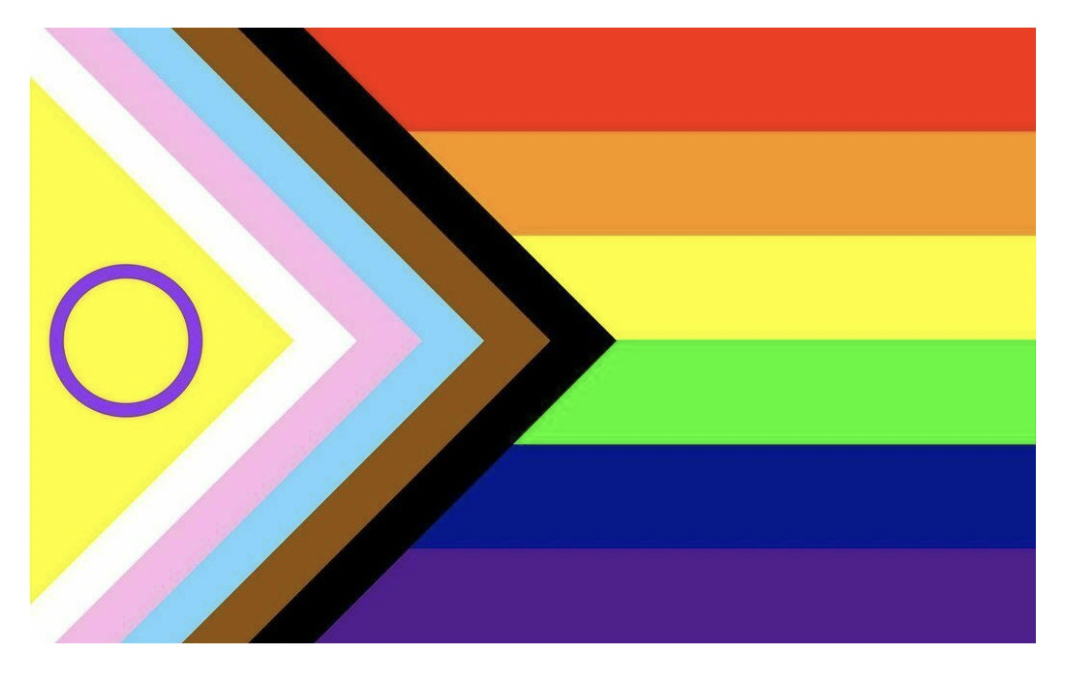

Grounded in purpose and guided by curiosity, this work is shaped by a deep respect for history, a commitment to social justice, and thoughtful care for complex human experiences.
From History to Practice: How our Symbols Reflect Courage, Resilience, & Our Guiding Values
VISUAL ANCHORS. LIVING VALUES.
Our visual identity is not decorative art—it is a statement of history and an active clinical alignment. The Pride flag and our feminist red-lip logo carry distinct legacies of visibility, resilience, and empowerment.
Inspired by the defiant use of cosmetics by women during WWII to assert self-expression under oppressive regimes, our logo embodies boldness and the absolute refusal to be silenced. Like the Pride flag, these symbols honor the ongoing fight for equity across marginalized communities.
At its core, who we are is completely bound up in how we experience intimacy. Your desires, relationships, and self-expression are shaped by your race, culture, gender, and personal history. No part of your story exists in isolation.
We reject single, reductionist narratives. Instead, we look at how every layer of your background and culture informs how you move through connection, intimacy, and the world today.
Our practice operationalizes these symbols through four core values:
Visibility: Mirroring the Pride flag, we celebrate every identity. We provide a dedicated clinical space where your whole self is explicitly seen, named, and honored.
Courageous Resistance: Our logo represents the bravery to speak, act, and love authentically despite systemic pressures, state violence, corporate expectations, and generational silencing.
Intersectional Justice: We recognize that culture, race, sexuality, and structural history constantly overlap to shape your unique, daily lived experience.
Agency: Therapy serves as a collaborative space to win back what has been constrained—from desire and body sovereignty to identity and expression.
The 1960s were pretty radical.
Why history in therapy matters…
HISTORY INFORMS HEALING.
You cannot heal outside the broader context of history. Powerful cultural movements inform this practice by helping us understand how the world around us impacts our mental health, sexuality, and identity today.
Historically, personal despair has always been inextricably linked to collective upheaval. We see this described in the profound, untranslatable anguish of toska (pronounced TAH-skah)—a rich Russian concept that spans a spectrum from a dull, restless boredom to a deep, unexplainable ache of the soul. At its core, toska captures the multi-layered shades of emotional pain:
A general, persistent uneasiness
The vague emptiness of existential angst
An intense, unquenchable yearning
Spiritual nostalgia and historical grief
The heavy, sick pining of displacement
Yet, this universal human experience is not just a passive state; it is an active search for meaning and sovereignty. It is a fundamental human struggle later echoed by Holocaust survivors, including Viktor Frankl, whose development of logotherapy proved that even in the darkest depths of collective trauma, human beings maintain an inextinguishable drive to find purpose and claim ownership over their own minds and bodies.
History is ultimately the study of people’s past behavior.
And therapy is the act of restoring their future agency.
No matter your diagnosis, gender, identity, or orientation, this therapy honors the legacy of the pre-pro-choice era of Traditional Healing and Midwifery (pre-1800s to mid-1900s), which provided community-based care before it was outlawed, as well as the massive intersecting shifts of the 1960s that revolutionized personal freedom.
A Unified Demand for Freedom
The historic shifts across these various secular and religious movements demonstrated that your own conscience, your personal boundaries, and your right to bodily autonomy are basic human rights. The fight for psychiatric survival, a right to safety, queer pride, women’s rights, and reproductive liberty were never isolated incidents—they were a unified, roaring demand for physical, mental, and social freedom.
At The Center for Identity & Sex Therapy, we anchor this rich background in the modern Reproductive Justice Movement (1994–Present), created by visionary Black women to help individuals gain absolute, real-world ownership and control over their own bodies.
By letting history provide the backdrop for your personal healing, you can unpack generational messaging, break out of learned helplessness, and safely reclaim your right to bodily autonomy, authentic self-expression, pleasure, and your right to be here.
Chronological Framework: Historical Timeline in More Detail
To help visualize how these movements intersect, our practice maps your healing against these foundational eras of human autonomy:
Traditional Healing and Midwifery (Pre-1800s to Mid-1900s): This era provided vital, community-based care before the rise of Victorian medicine systematically criminalized their practices, forced care into the shadows, and enforced a legacy of deep societal silence.
Socio-Political Institutional Shifts: Broader socio-political pressures that forced mid-century healthcare and human rights organizations to permanently reshape their definitions of individual autonomy on a global scale.
The Women’s Rights and Pro-Choice Movements (1960s): Ignited by the 1960 FDA approval of the birth control pill, this movement secured vital legal victories and revolutionized physical autonomy; yet its focus on individual "choice" often overlooked systemic barriers like poverty, racism, and medical trauma.
The Public Health Body Tension: The intersection of biological intervention driven by the birth control pill. While this breakthrough expanded reproductive liberty, it permanently altered the relationship between state mandates and the human body, setting up an enduring tension between centralized public health intervention and personal bodily sovereignty.
Existential Brinkmanship: Navigating the deep anxieties of the Cold War and the 1962 Cuban Missile Crisis, fueled by escalating international nuclear tension.
The Vatican II Council (1962–1965): A massive theological paradigm shift that transitioned the collective understanding of morality away from rigid institutional compliance and placed it firmly onto the individual's internal conscience and personal responsibility.
The Cold War and International Peace Movements (1960s): Shaped by global geopolitical standoffs, the Cuban Missile Crisis of 1962, and the localized horrors of the Vietnam War, this era forced an intense existential confrontation with nuclear annihilation and systemic state power. These sweeping international crises galvanized massive anti-war and anti-imperialist resistance movements, permanently altering public consciousness by demanding an end to state-sponsored violence and the weaponization of human lives on a global scale.
Anti-Draft Peace Movements: Resisting the government's excessive reliance on forced military conscription and global state violence during the Vietnam War.
The 1960s Vaccine Revolution: A life-saving public health triumph anchored in the Vaccination Assistance Act of 1962 and the 1963 licensing of the live measles vaccine. This breakthrough federally supercharged campaigns to eradicate devastating childhood diseases, establishing a protective infrastructure that saved millions of lives and revolutionized baseline community health.
The Civil Rights and Anti-Racism Movements (1960s): Galvanized globally by the 1963 March on Washington, this paradigm-shifting struggle shattered institutionalized racial barriers, serving as the foundational blueprint for modern liberation movements and proving that physical and social sovereignty are basic human rights. The Queer Liberation Movement sparred and set ablaze by the Stonewall riots in 1969.
The Deinstitutionalization Movement: Anchored by the 1963 Community Mental Health Act, this movement successfully emptied abusive, state-run asylums. However, the state's systemic failure to provide local funding left millions stranded in a new cycle of homelessness, criminalization, and medical trauma.
The Grief Paradigm Shift (1969): Dr. Elisabeth Kübler-Ross publishes her seminal 1969 research introducing the stages of grief, structurally forcing the medical establishment to recognize the psychological autonomy, emotional complexity, and internal realities of dying patients
The Modern Reproductive Justice Movement (1994–Present): Moving far beyond individual "choice," this intersectional framework—founded by Black women—asserts that true bodily autonomy requires the human right to have children, not have children, and parent the children we have in safe, sustainable, and well-resourced communities.

Why work with an AASECT-Certified Sex Therapist?

You could talk about your sexuality with a general therapist. A lot of people try.
But many clients tell us: They’ve spent months—or even years—in therapy… and still feel stuck.
Because not all therapists are trained to go there.
At The Center for Identity & Sex Therapy, we view intimacy through an identity-informed, relational lens. This AASECT-certified practice explores how attachment, culture, religion, body image, and life transitions shape how you love and connect.
True healing requires looking through a historical lens to address the systemic narratives that cage the physical body.
Clinical Framework:
Specialized Certification: Advanced AASECT credentials to navigate highly sensitive conversations safely.
Elite Foundation: Grounded directly in Ivy League social work training.
Meaning-Centered Depth: Rooted in Viktor Frankl’s logotherapy to address the underlying psychology of despair and learned helplessness.
Systemic Justice: Viewing specialized sex therapy not just as clinical treatment, but as an essential act of social justice.
We exist to help adults break cycles of trauma, shatter societal taboos, reclaim absolute control over their bodies, and safely reconstruct their humanity.
guiding principles
INTEGRITY
The Center for Identity & Sex Therapy is guided by ethical, evidence-based care and a commitment to honesty, accountability, and the well-being of every client.
COMPASSION
Healing begins where shame and judgment end; this work is grounded in empathy, dignity, and deep respect for your lived experience.
AUTONOMY
Your body, identity, and relationships belong to you, and therapy is a space to explore what feels most authentic — free from pressure or expectation.
INCLUSIVITY
Every identity, body, orientation, and relationship structure is welcome here, and your experience will be met with respect, curiosity, and care.
Did you know?
At The Center for Identity & Sex Therapy, we believe that true sexual wellness requires dismantling the historical and cultural myths that have long policed our bodies. For centuries, mainstream science and medicine tied the concept of the climax strictly to heterosexual reproduction—viewing pleasure outside that narrow boundary as deviant, irrelevant, or non-existent.
By tracing the intersection of the orgasm, queer history, and sexual liberation, we find a powerful narrative: pleasure has always been a site of resistance.
When we decouple sexual climax from the demands of procreation, we open the door to a more expansive, inclusive, and liberatory understanding of human intimacy. We honor this history by helping our clients reclaim their bodies, redefine their sexual scripts, and pursue pleasure on their own terms.
Ancient Greek medicine tied pleasure to reproductive "necessity."
Prominent physicians like Hippocrates argued that both biological men and women possessed a "reproductive seed." They believed a woman had to experience an intense climax to release her own seed into the womb for conception. This framework effectively chained the female orgasm directly to biological procreation.
Ancient Greek sexuality was structured by power, not orientation.
While same-sex intimacy was widespread and institutionalized, the concept of a fixed "heterosexual" or "homosexual" identity did not exist. Relationships were strictly governed by age, social class, and civic status. Citizens were expected to marry to secure heirs for the state, treating same-sex desire as a baseline human appetite rather than a distinct sexual identity.
The "Orgasm Gap" shrinks significantly in queer relationships.
Large-scale behavioral studies consistently show that lesbian women experience orgasms during partnered intimacy at significantly higher rates (around 86%) than heterosexual women (around 65%). Researchers attribute this shift to queer sexual scripts that prioritize varied, full-body intimacy and clitoral stimulation over standard, penetration-heavy timelines.
Victorian medicine weaponized female pleasure under the guise of "Hysteria."
For centuries, patriarchal medicine viewed the uterus and female anatomy as a site of emotional instability. When women exhibited anxiety, depression, or general unrest, they were diagnosed with "hysteria." Physicians manually brought patients to a "hysterical paroxysm" (orgasm) as a clinical cure. This pathologized female pleasure by framing it as a medical clearance of fluid rather than an act of personal joy, giving rise to early mechanical vibrators.
20th-century marriage manuals weaponized the "simultaneous orgasm."
During the 1920s and 1930s, heteronormative marriage manuals popularized the idea that a husband and wife must climax at the exact same moment to prove a marriage was successful. This rigid expectation created immense performance anxiety, heavily pathologized women who could not achieve it, and completely ignored diverse expressions of pleasure.
The medical community once tried to use orgasms as "conversion therapy."
During the mid-20th century, behavioral modification programs attempted to forcefully alter the sexual orientation of gay men. Doctors used crude conditioning tactics, introducing heterosexual imagery precisely at the moment of climax to forcefully link straight stimuli with reward centers—a harmful and abusive practice thoroughly debunked by modern sexology.
Historically, the term "orgasm" did not mean a sexual climax.
Before the 19th century, the word orgasm (derived from the Greek organ, meaning to swell or be excited) described general states of violent emotional excitement, physical swelling, or inflammatory bodily tension. It was only in the 20th century that the term became an exclusively sexual metric, heavily tied to social ideas of productivity and bodily performance.
-
Understanding history allows us to recognize that sexual shame is a cultural artifact, not a biological truth. Many modern sexual dysfunctions or identity struggles stem from outdated, patriarchal, and heteronormative "rules" that individuals have internalized. Tracing this history helps clients depathelologize their unique desires.
-
While male orgasm is biologically tied to sperm transfer, the evolutionary purpose of the female orgasm has long puzzled androcentric science. Modern evolutionary theory suggests it is a beautifully preserved ancestral trait. Today, its primary biological and psychological function is to flood the brain with a hormonal cocktail (like oxytocin) that facilitates deep emotional bonding, stress reduction, and communal intimacy.
-
Medical and surgical transitions can dramatically alter how the body processes physical sensations. Rather than viewing these changes as losses, queer and trans-affirming sex therapy views them as opportunities to discover plural "technologies of intimacy". Our clients learn to expand their definition of climax beyond traditional anatomical expectations, centering gender euphoria as a core component of pleasure.
-
Absolutely not. A core tenet of our philosophy is sex neutrality, which dictates that a person’s worth, health, and relationship success are not measured by how often they climax. For many individuals, including those on the asexual spectrum, intimacy is built on emotional vulnerability, somatic exploration, or skin-to-skin connection without the pressure of an end goal.